
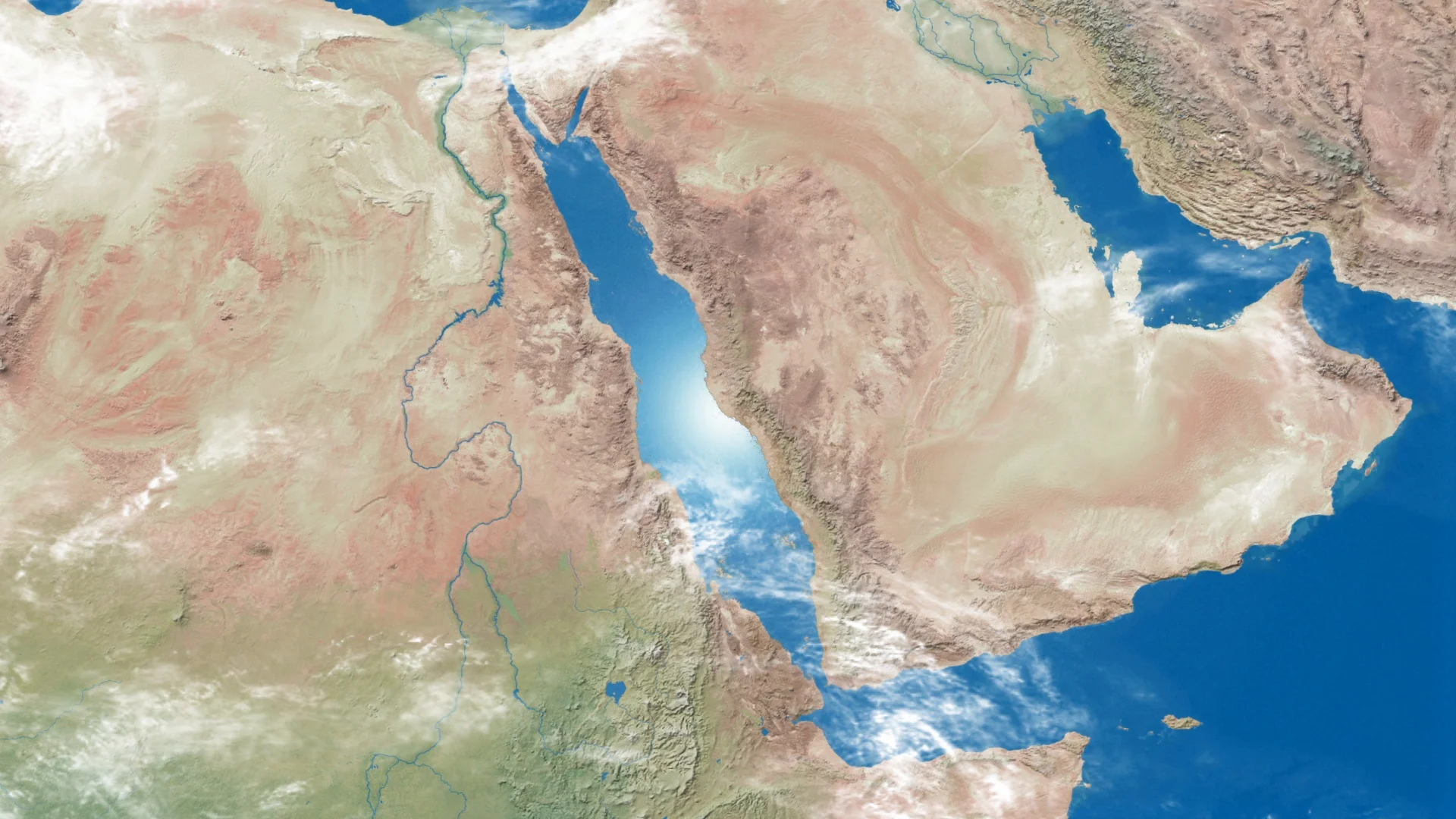
Meta Platforms can realize $24.75 million in immediate Capital Expenditure (CapEx) savings on the 2Africa Red Sea segment. The current consortium plan relies on a heuristic "shallow-water" paradigm that incurs unnecessary costs while exposing infrastructure to catastrophic anthropogenic risks. We propose the Algebraically Optimal Path (AOP), a deep-water solution derived from high-dimensional topological analysis.
The $24.75M Value Proposition
- $9.75M Savings: Elimination of 15% armoring premium via deep-water routing.
- $15.00M Savings: Avoidance of the "Red2Med" hybrid terrestrial/subsea system.
- Risk Elimination: Statistical negation of $1.5M/hr OpEx downtime liability.
Introduction: The Steiner Tree Problem
The routing of the 2Africa cable system through the Red Sea represents a classic Multi-Terminal, Multi-Objective Steiner Tree problem. The objective is to connect critical nodes while minimizing a cost function $C(P)$ defined by:
Meta's current strategy employs a "brute-force" attempt to mitigate risk through physical reinforcement rather than topological optimization. This fails to converge on a global minimum, resulting in excessive capital spend.
The Heuristic Audit: Deconstructing the Flaw
The baseline plan is predicated on a "Shallow-Water Paradigm," assuming infrastructure must traverse the continental shelf ($<100$m depth), a zone dominated by anchor strikes and trawling. The proposed "Red2Med" workaround inadvertently places the asset in high-risk trawling grounds, costing over $15 million in unnecessary complexity.
"Burial is a mitigation technique applicable only to shallow environments. It does not solve the root problem of occupying a high-traffic maritime corridor. A single anchor drag event in March 2024 severed four parallel cables simultaneously."
The Solution: Algebraically Optimal Path (AOP)
The AOP utilizes the Red Sea's central axial trench. By routing parallel to the rift but offset to the stable slope at depths exceeding 1,000 meters, the AOP leverages a geophysical barrier against human activity. Commercial vessels do not anchor in these depths, and bottom trawling is effectively non-existent.
Financial Impact: The Proof
| Metric | Heuristic (Current) | AOP (Optimal) |
|---|---|---|
| Base Cost per km | $25,000 | $25,000 |
| Armoring Premium | +15% | +0% |
| Total Material Cost | $74,750,000 | $65,000,000 |
The AOP utilizes a direct, deep-water spine that bypasses the need for the Red2Med hybrid system entirely. Total savings of $24,750,000 are guaranteed by shifting the routing domain from the 2D shallow shelf to the 3D deep-water environment.
Ask ugly questions. Find beautiful answers.